 Contact UsContact Us
Prevent refinery upsets and optimize petrochemical operations with RISHI. Transform complex process data into actionable guidance to minimize unplanned downtime and safeguard refinery margins.
Book a Consultation CallRefining and petrochemical operations run under constant pressure. Units are highly interconnected, operating windows are tight, and a single incorrect action can result in cuts, bypass changes, or firing adjustments that cascade into quality issues, equipment damage, or an unplanned trip within minutes.
While plants generate massive volumes of industrial data, insight during abnormal situations is often limited. Critical decisions frequently depend on expert intuition or tribal knowledge that may not be available on every shift. Teams are forced to act fast with incomplete information, knowing every decision carries safety and financial consequences.

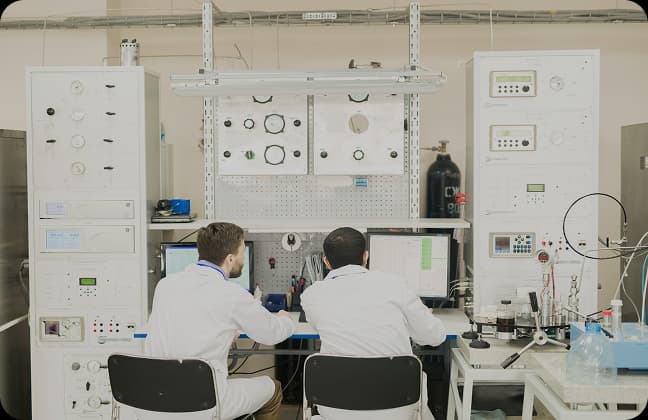

RISHI shifts the operational culture from intuition to evidence-based decision making using Industrial AI:

In traditional process control, operators react to a single "symptom," like a high-pressure alarm. RISHI looks at the entire process envelope simultaneously. It correlates dozens of process variables, temperatures, pressures, flow rates, and lab results to reveal hidden relationships between units. The Benefit: Instead of seeing a variable "out of range," teams see the multi-variable pattern that explains the root cause.
Refinery teams notice value first in speed and clarity:
RISHI eliminates "spreadsheet archaeology" by instantly correlating multi-unit variables. Instead of manual data gathering, teams get an immediate diagnosis of complex issues like column flooding or heat exchanger fouling.
By digitizing expert logic, RISHI ensures Shift A and Shift C respond to the same upset with the same validated moves. This removes "individual hunches" and tribal knowledge gaps, ensuring the safest path is always taken.
During alarm floods, RISHI filters the noise to highlight the lead variable. Operators move from reactive "firefighting" to a planned, execution-style response that prevents secondary instabilities.
Bridging the gap between complex process data and high-confidence operational action
Answers to common questions about how RISHI supports real operational decisions.
Traditional tools like DCS and Historians are "data-rich but insight-poor," focusing on monitoring and basic alarms. RISHI goes beyond data collection by providing an intelligent layer of diagnosis. It uses a combination of Fault-Tree logic, simulation, and ML models to explain why a deviation is happening. It recommends specific, validated actions to fix it, whereas a DCS merely tells you a limit has been reached.
Yes. RISHI is specifically designed for real-time decision support during high-pressure events. While traditional troubleshooting can take hours of manual trend analysis, RISHI correlates multi-variable data streams instantly to provide rapid diagnosis and prioritised actions. This allows operators to act with the confidence of a senior engineer, even during nights or weekends.
No. RISHI acts as a force multiplier for your engineering team. It automates the "grunt work" of data cleansing and manual calculation, saving engineers roughly 5–8 hours per week. By digitising "tribal knowledge" into a shared Knowledge Hub, it ensures that the best engineering logic is available to every operator on every shift, preventing knowledge loss when experts retire.
Most refineries suffer from "firefighting", where the same issues, like column flooding or heat exchanger fouling, keep recurring. RISHI stops this cycle by creating a centralised Case Library. It records the exact symptoms, root causes, and successful corrective actions of past events, ensuring the plant learns from every incident and applies proven solutions site-wide.
One of RISHI's biggest differentiators is traceability. Unlike "black box" AI, RISHI’s recommendations are built on transparent Fault-Tree logic and first-principles simulations. Every advisory is explainable and reviewable by engineers, allowing them to see exactly how the system reached its conclusion before they authorise a change in the field.
Refineries typically see measurable impact within the first few months, including a 30–60% reduction in troubleshooting time and a 10–25% reduction in unplanned downtime. Financially, avoiding just one unplanned CDU slowdown can save between $0.5M and $1.5M annually, making the return on investment significant and fast.
See how RISHI helps teams detect issues early, diagnose faster, and make confident operational decisions. It turns complex process behavior into clear, actionable guidance to resolve unit upsets and slow degradation.
View BrochureNo form submission required


